
Basic, Simple Calculation
Teaching myself to find a move when there isn't a tactic

Welcome back to Chess in Small Doses, a Substack about adult improvement in chess. Today I’m writing about calculation, the skill in chess that lets us (hopefully) find the best move in a position. It’s not a complex process, but like so much of chess it’s not easy either. The biggest challenge with calculation is that it’s all about skill and not about knowledge. Let’s get into it.

The Move Before the Move
Let’s start with a position from a recent game of mine. I got to this spot after the Accelerated Panov opening (1.e4 c6 2.c4 d5). Take a minute and try to find a good move for Black.
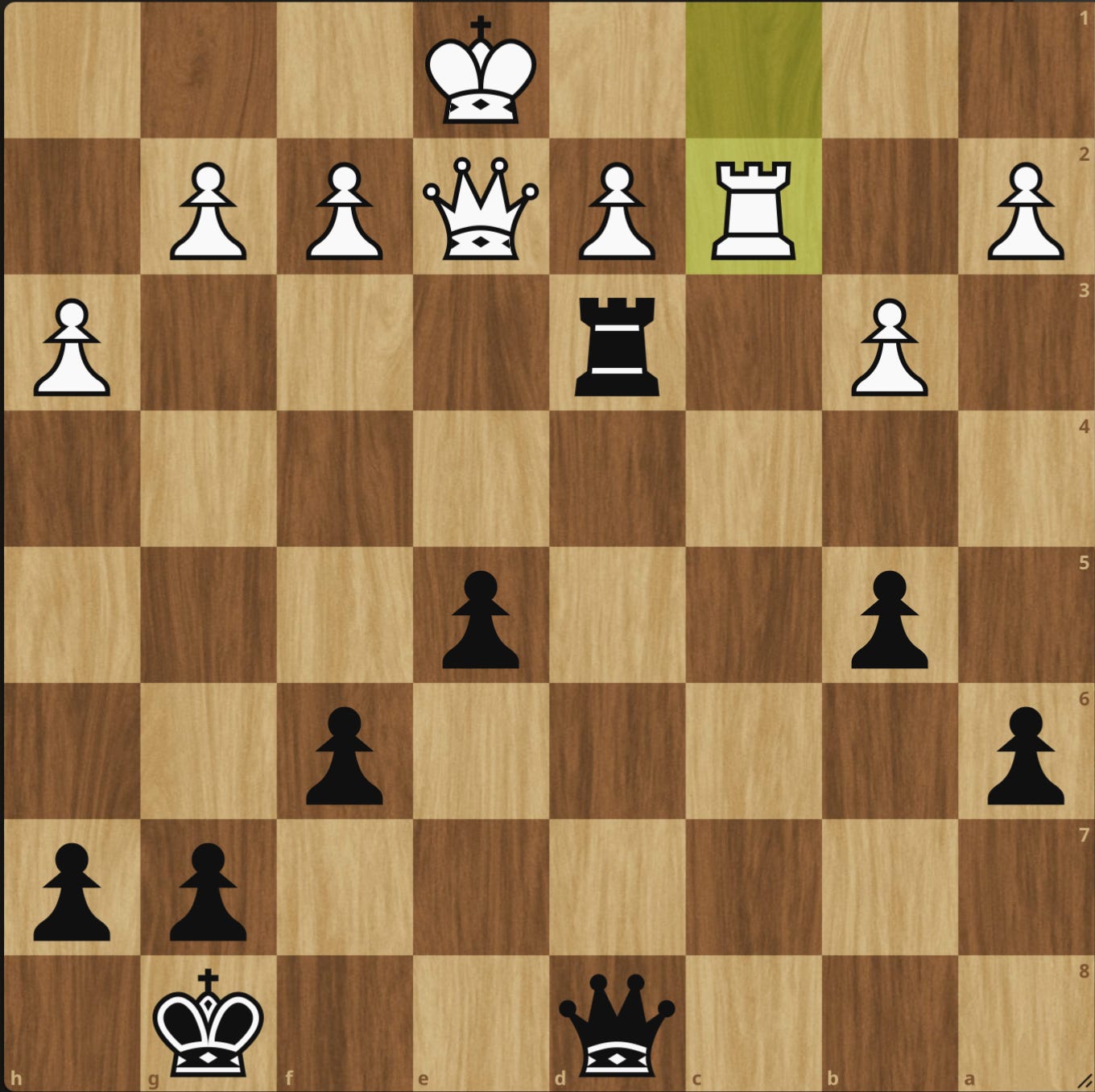
This position says a lot about where my chess game is at. As Black, I had navigated the opening and came out with a clear strategic advantage. Even though the engine has this position roughly equal, it’s “easier” to play as Black. White has the isolated d-pawn and Black has a Kingside majority of pawns. Strategically Black can try to keep that pawn stuck while pushing the other pawns forwards. That is if I could perform some basic, simple calculation.
What happens to me in positions like this is I lose the thread. There’s not a tactic here, no winning blow. It’s just a position with advantages and weaknesses. I had the simple plan of activating my king. What I didn’t do was stop and think what my opponent might do. I played Kf7? impulsively because it looked good. However it allowed Qe4 (or even Qh5+) and then White had access to the b7 square. Suddenly my opponent had counter play and believe it or not I went on to lose this game. (The engine suggested moves like Qd7, g6, or h6 keeping the tension)
This is what I call the move before the move. Kf7 wasn’t a blunder exactly, but it wasn’t good. The subsequent blunder came later as a direct result of my move. Over the years, I have completed innumerable tactics puzzles and have developed a strong foundation in basic, simple tactics. My tactical ability has always been a strength of my game. What hasn’t been a strength is what to do in non-tactical positions. The issue for me isn’t making the wrong choices… it’s that I don’t even give myself the chance to find a better move. Too often it’s “see move, make move.” This happens to me a lot. The choice I made with Kf7 wasn’t good. I could have predicted that. However I missed it because I didn’t perform basic, simple calculation.
What is Calculation
Turns out I’m not alone in this. I consider myself an intuitive player but that comes with some costs. One of them is it’s very hard to get myself off of the very first move I see. In his book Thinking Inside The Box, Jacob Aaggard wrote that intuitive players “get a lot for free” but tend to be sloppy where accuracy is required. (For more advice from Aaggard see my post “Simple but not easy.”) His advice was that intuitive players needed to learn calculation, which he defined as finding moves that you don’t “get for free.” Calculation isn’t just “I go here, they go there.” Instead it’s seeking out and comparing one move options.
He said chess is a game where each move you have to solve the problem of “what do I play now?” The process he suggested was extremely basic:
“See what the options are. Determine the consequences of those options. Choose which one you like the most.”
Nothing earth shattering here, it’s like buying a car or selecting a movie to watch. But he joked that even grandmasters won’t do this. The key is giving yourself options to compare. (Science would say we make optimal decisions when we have enough options to compare but not so many that we’re overwhelmed. ) This is basic, simple calculation… giving yourself options. However I find I struggle to do this consistently because it takes effort and practice.
Let’s illustrate with point with a position from one of my OTB games. It’s White to move, find 2-3 options for White.
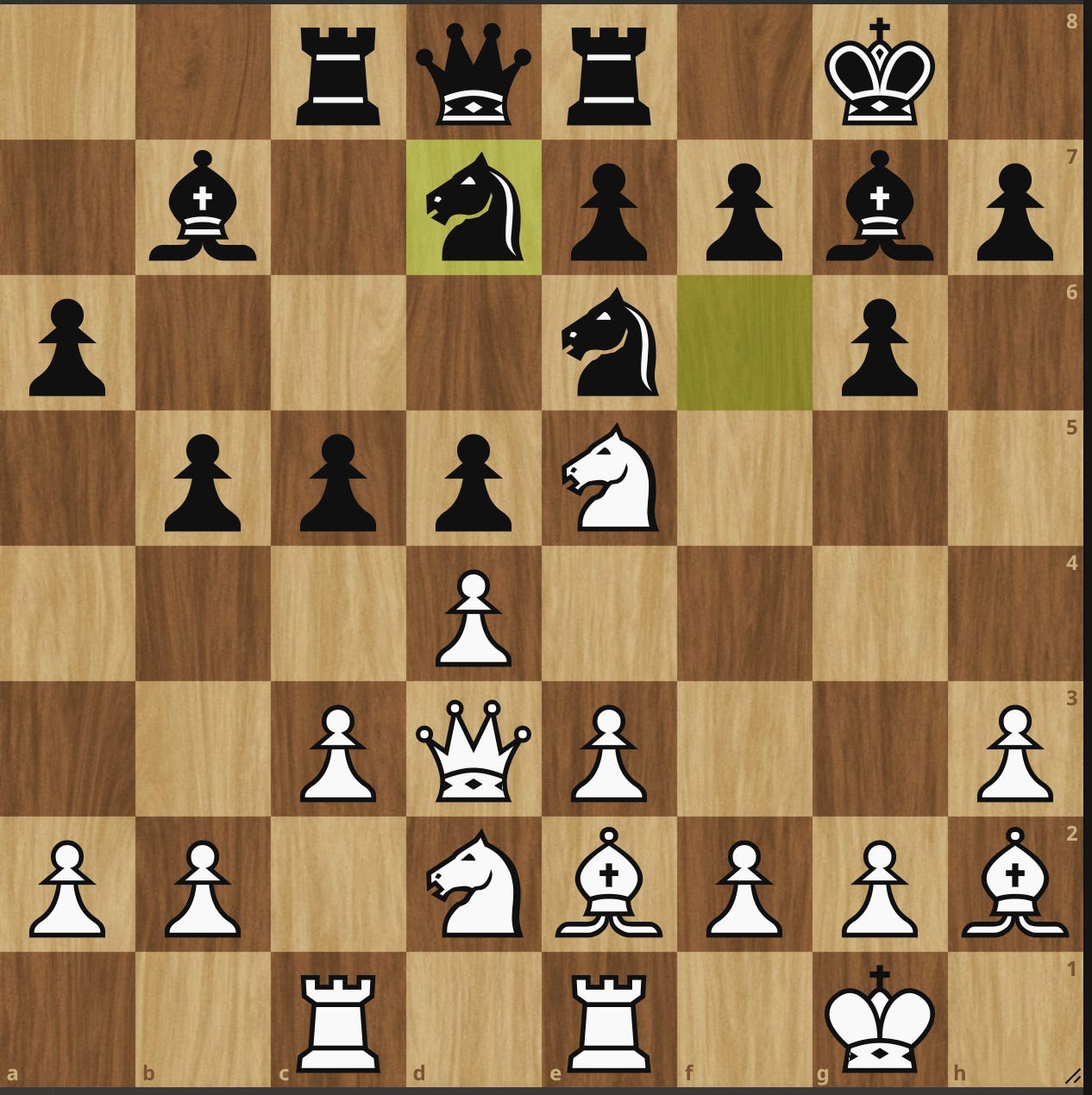
Most of us when we look at a position will immediately see some options. When I looked at this position over the board two moves came to mind immediately: Nxd7 and Ndf3. These were the moves I got “for free.” I spent some time looking for a tactic with things like Nxg6 or Nxf7 but those got discarded almost immediately. I ended up playing Red1? for some reason that I can no longer remember. (Again my challenge of finding a non-losing move in non-tactical positions.)
One option that came up in analysis was f4! When it came up in analysis my first thought was that it blocks my bishop, turning my good piece into a bad one. However, f4 has an added benefit because it allows fxe5 or f5 depending on how Black replies. Both of these are strategically good for White, giving White the easier position to play. (FYI, the engine said all three moves are equal).
Why didn’t I consider f4? Well, because I didn’t see it right away and I haven’t (yet) trained the skill of basic, simple calculation.
A Fundamental Problem
It’s my option that a fundamental problem of adult improvement in chess is that it’s more about skill than about knowledge. However, knowledge is so much easier to acquire than skill. Look at everything that is available for the improver. Books, Chessable courses, videos on YouTube, apps, and coaching all meant to add knowledge to your game. Most adults heavily gravitate towards adding knowledge (as do I). It’s much easier to find new knowledge than it is to acquire new skill. For many adults it just seems so logical that adding knowledge should to help our chess. Yet we all know players who have huge book collections (looking at myself there) who are stuck and not improving.
Developing skill however is harder, slower, and more frustrating. It requires repeated effortful attempts, and often starts with failure. Developing skill requires practicing something again and again and again. It’s not about learning new material, it’s about repeatedly and deliberately practicing the same thing over and over. This is one reason why kids learn differently than adults, they are far more likely to engage in play based learning. Not that adults can’t do it, but our natural tendency is to read the manual first. Adults are strong at discipline which (ironically) they’re more likely to use for their kids benefits than their own.
The ease and appeal of acquiring new information is bad enough. What’s worse is that every company and influencer in chess knows that promising quick results is how make money. New knowledge, especially opening courses, hold that allure for many of us. It’s not just chess, as we live in a time where algorithms feed us new information constantly. We are overwhelmed with choice.
Strangely I have come to appreciate the wisdom of the Soviet School of Chess which started new players off with endgames. Endgames are pure calculation. However, many adults (myself included) can find them boring. We need to enjoy what we’re working on. Thankfully we have many options to practice the skill of calculation.
A Different Kind of Work
Training calculation is fundamentally a different kind of work than tactics in my opinion. Tactics is all about pattern recognition first. However, learning to look beyond what we get “for free” takes a new habit. Calculation isn’t about getting the answer right so much as it’s about always giving yourself options.
Recently I asked for help on my non-tactical calculation from some higher rated players. One of them even agreed to become my coach. He suggested a book I’d never heard of called Drill Your Chess Strategy. It’s a book with 500 strategy puzzles that don’t have a tactic. The point was to start practicing the new habit of giving myself options. Here’s an example where it’s Black to move (from the Forward Chess free sample). Take a minute and find 2-3 possible moves for Black.
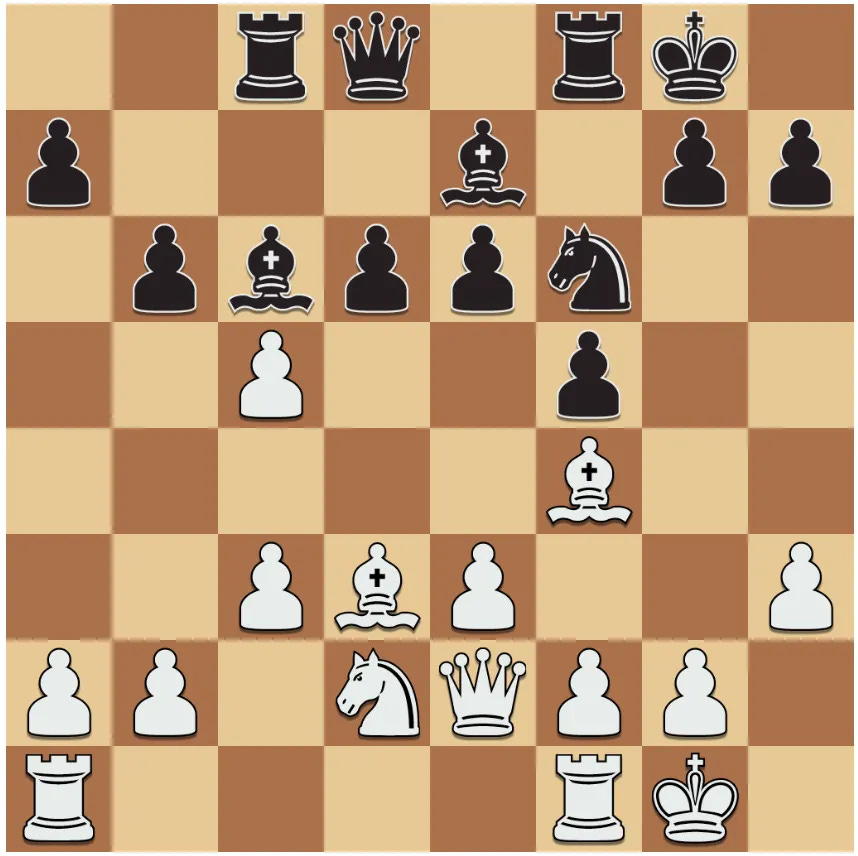
When I did this puzzle I got it wrong, but that’s wasn't the point. The point was that I practiced looking for moves beyond what I initially saw. What I first saw was e5 followed by e4. What I didn’t fully consider was bxc, giving Black a center pawn majority. What I got from the puzzle wasn’t the new information, rather I got a rep, a chance to improve on one of the weakest parts of my chess.
Other popular options include Practical Chess (book) and Fundamental Chess Calculation Skills (Chessable). There’s even a free study on Lichess. Whatever you use, the practice is simple.
See what the 1 move options are (beyond what we get for free)
See what the consequences are.
Choose the one you like the best.
Making a new habit isn’t easy, and I’m not always great at it. My brain hurts if I do this for too long and wants to stop at the first good looking move. But that’s why it’s so important. For me I believe this is the critical skill I need to reach my goals in chess. I suspect I’m not the only one.
Thanks for reading! I hope this was helpful. It’s summer now so I’ll be away for a bit from Substack. Hope you all have a great 4th of July in the US and enjoy the World Cup!
Great post! Very exciting to see your progress on this skill. Recently IM Rose Atwell was discussing her style of improving this skill, which is basically just spamming “chesstempo mixed” puzzles. Lots of ways to work on non tactical calculation.
always appreciate your well written articles Dr. Vasquez. Thank You