
What $45 Gets You
Why OTB is critical for improvement

Welcome back to Chess in Small Doses, a Substack about adult improvement in chess. Today I’m writing about over the board games (OTB) and going over a recent tournament. OTB tournaments are not glamorous and, more often than not it’s mostly kids. However, in my opinion playing OTB is the single greatest investment you can make for your improvement. Let’s get into it.
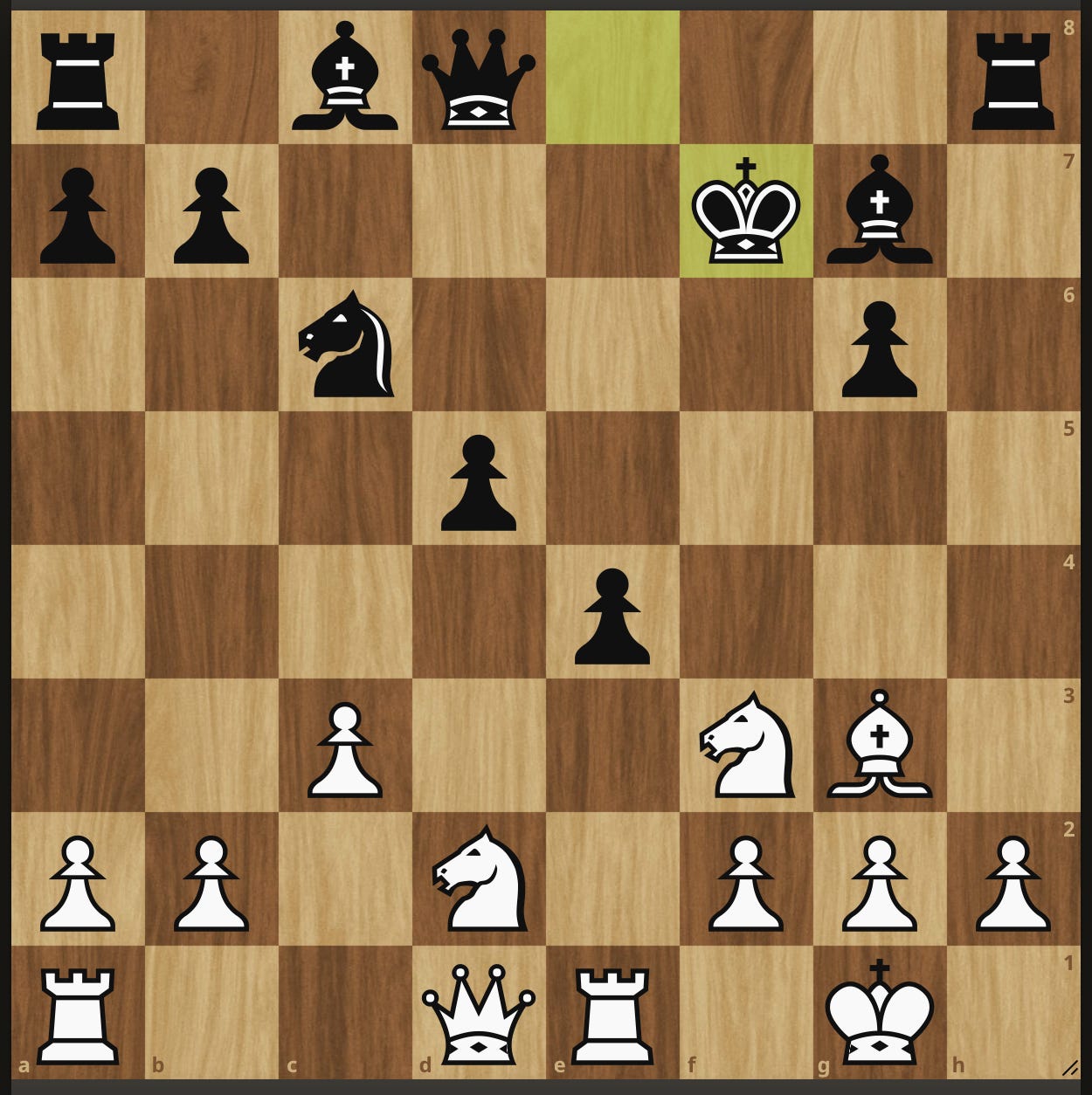
Before we start I’m going to give you a position from an OTB game of mine. I was playing White against an 1800+ player and had won a pawn in the opening. However, he had central hanging pawns and was pushing them. This was the critical moment. Take a look and think about what you’d do. (It was a 90+30 game so there’s a ton of time to think.) Find the answer at the bottom of the piece. White to play:
A Real Challenge
Recently I played in an OTB tournament. Since I stated my goal was to reach USCF 1800, the first step was to play in some rated games. This goal is a pretty steep climb for me, and I came into this tournament at USCF 1515. Even worse, I could only stay for the first three rounds given life demands. Truth be told, getting out to an OTB tournament is a real challenge.
First off, the time required is significant. I’m a doctor, a Dad, and a husband and these are roles I cherish. Taking time off to play OTB usually comes from one of these buckets. Secondly, I’m often one of the only adults in the room who isn’t there with their children. It’s an odd feeling seeing the moms and dads my age sitting outside the playing hall while I play against their kids. Lastly, there’s the cost. To play in my most recent tournament was $45 ($40 late registration fee + $5 for playing up a section). While that’s not breaking the bank, it’s also not free unlike online chess. It brings up the question, why not just play online?
Well my answer is that OTB is the truest test of your chess. When you sit down at the board, there’s nothing else to do. There’s no phones, no emails to be answered, no family members asking for a quick favor. It’s just you, your opponent, the board, and the clock. Other than the occasional antics of another player and the stray cough, it’s as pure as chess experience as you can have. Everyone is there for the same thing, to play a serious game of chess. Your opponents have prepared for this and so have you. There’s nothing left to do but play the game and see what happens.
Making a Mark
Think back to the last time you played online. You may remember something of the game, perhaps an interesting position or a critical moment. However, given that it cost you very little to play online I’m suspecting like me these games kind of fade into the background or out of your memory altogether. Perhaps it is so because we haven’t had to invest much at all in the outcome. We can always get another game online, or maybe get a few quick blitz games to wipe away the taste of a bitter defeat.
This is not true for OTB. Sign up for a weekend quad and you’re in for the full monty. Win, lose, or draw you’ve got 4 games over 4-8 hours. You’ve got to learn to sit with loss, to pick yourself up and, come back ready to play again. Each game I’ve played OTB I can recall the opponent’s face, the feelings I had when the critical moments came up, and the emotions afterwards. In fact it’s near impossible to forget them.
There’s some science here. The physical act of writing itself has a clear role in memory formation. Also, just the full visceral experience of OTB chess is just easier to recall. There’s sight, sounds, emotions, and the physical motion of moving the piece, hitting the clock, and writing down your move all make it more memorable. The focus is intense, the stakes real, and your opponent wants to win just as badly as you do.
I can recall a 7 year old playing for stalemate against me when I was up 2 full pieces… and almost getting it! That kid had a habit of slamming down his pieces each move, something I found actually really endearing. Loved his spirit! A few tournaments ago, the same happened when I was about to promote to a queen. Had I been too quick it would have been stalemate. Unreal how resilient these players are!
A Rising Star
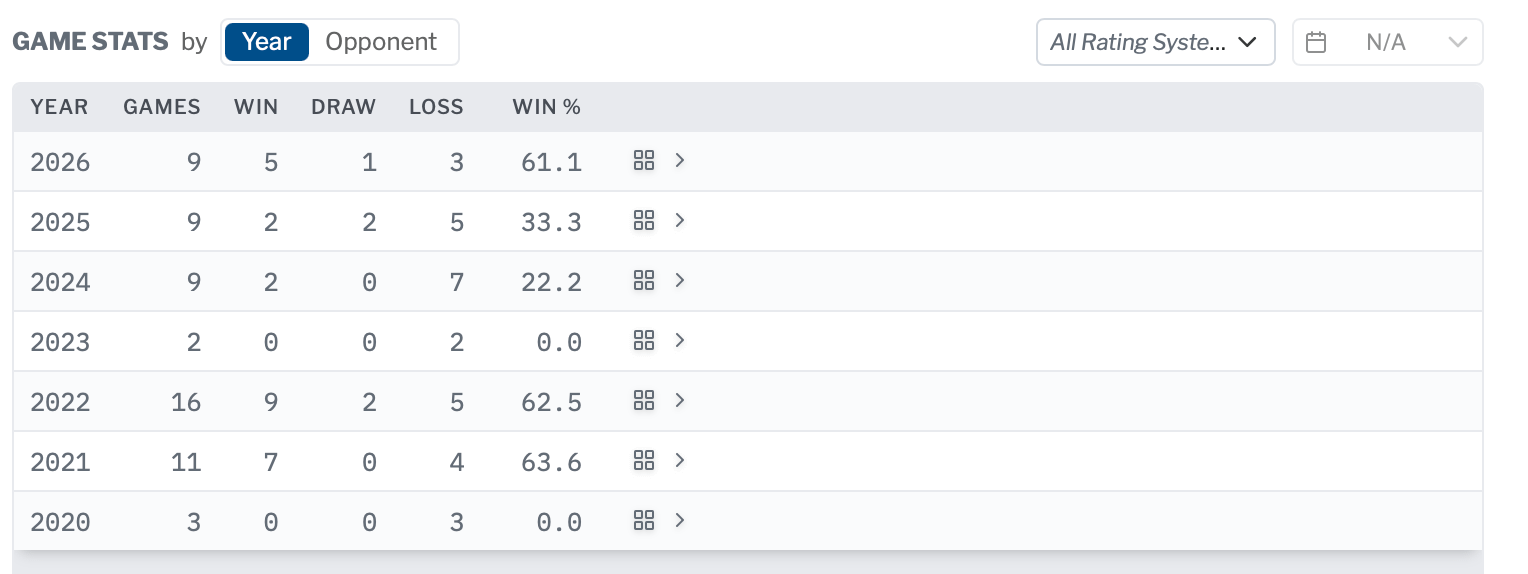
I played exactly 20 OTB games over the last 3 years. This was partly due to the challenge of OTB and partly due to my motivation. Having a crazy and widely variable schedule does not make this easy. Being an ER doc means I have exactly 50% of my weekends off. Looking for weekday tournaments I found one last year but they stopped holding the tournaments after November. That left the weekends, which has been harder. However after setting a BHAG to shoot for, I’ve found a new drive. I made the commitment to play in as many OTB tournaments as I can. I’ve been able to match last year’s total already. Here’s my tournament history from USCF so far.
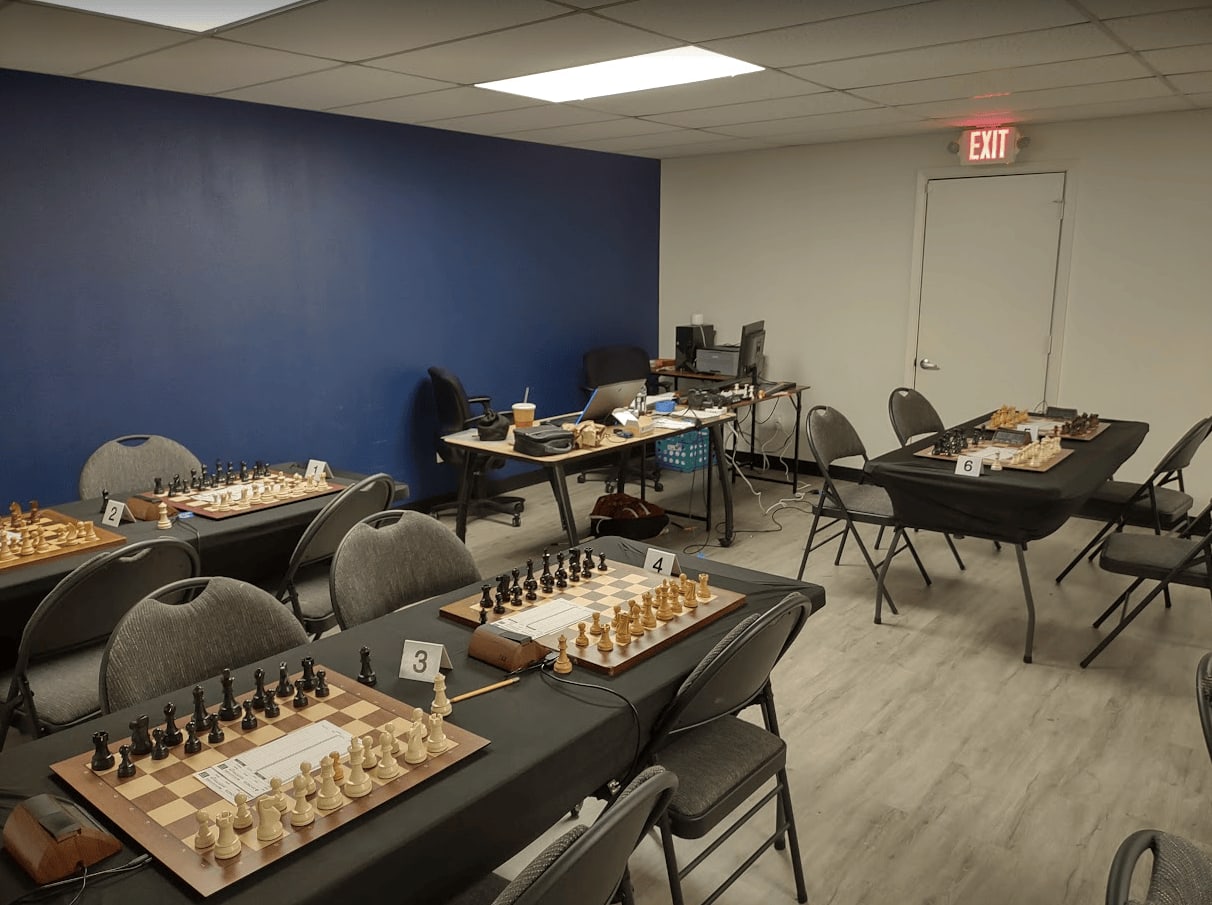
I use the website SouthwestChess to find local tournaments but one group I like a lot is Rising Star Chess. They run tournaments very efficiently, always have boards and clocks set up, and there’s excellent competition in the rating bands. So I signed up for the May Grand Prix (Game 45/d10) and pre-arranged a 0.5 bye for the last round. Life required I be elsewhere in the afternoon.
Game 1: J. Broyles (1604) vs N. Vasquez (1515)
I was straight up losing here. This kid plays the Jobava London and some of my worst losses have come against that opening. This was the second time I have played against him as Black is as many weeks and somehow my improvements on the previous had not helped. He beat me last time and I was on my way to losing again. I had studies what to do as Black after his 4.f3 line but I messed up the move order in this game (my penchant apparently) and we got to here. After starting with 45 minutes, I had 33 left on my clock, he had 12. One “benefit” of giving your opponent lots of reasonably good options that win is they calculate… a lot. He had run his clock down trying to calculate all the different lines. It’s a bit like having so many presents to open at Christmas, it’s hard to choose which one to open first. He must have been feeling time pressure because my next move was Ne5. He noticed the check on d3 but missed the threat against his Queen. After O-O-O?? Nxc6 Black is winning. To his credit he played on until I was able to find the mate. Tough kid. He went on to win a share of first place in the tournament. 1-0, 1/1
Game 2: N. Vasquez (1515) vs V. Varma (1659)
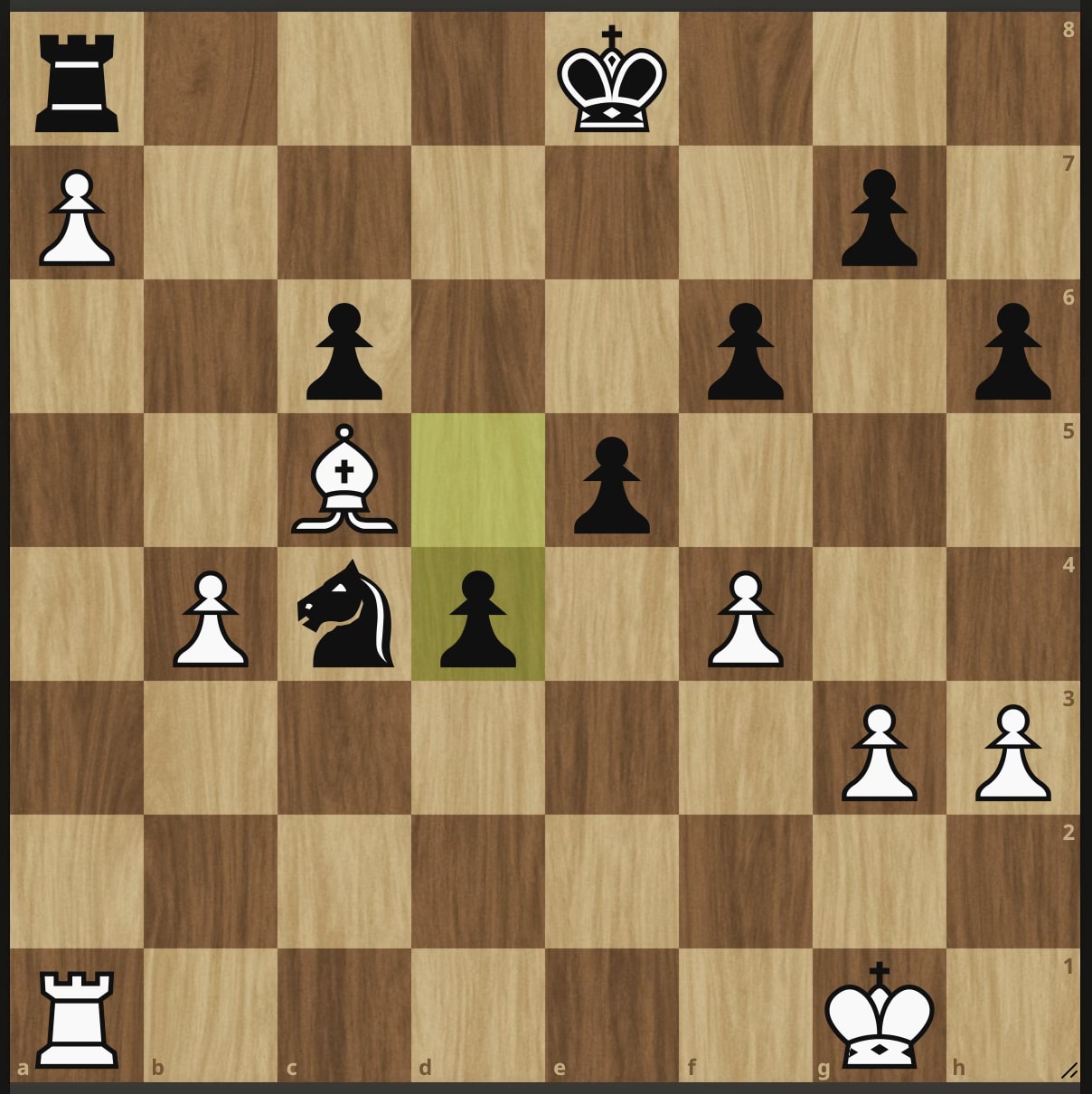
I got to meet this kid’s father who recognized me from this blog and is a subscriber (hey Mr. Varma!). I was really happy to see he was also playing in the tournament. So many parents bring their kids to tournaments but don’t themselves play. It’s such a missed opportunity to share the experience with your children.
His son (also a subscriber!) outplayed me in the London as Black. He had a better position but I had been able to gain the initiative by pushing the a pawn all the way down the board. We reached this critical moment where White has a winning move. If I played fxe fxe Rf1! there’s no stopping the rook from getting to f8. The pawn on a7 will either promote or be captured by the rook which would then taken by the bishop. Like so many of these calculation challenges, I didn’t quite get it right. Instead I played fxe fxe Rc1? with about 12 minutes left on the clock. He found Nd2 which not only prevented Rf1 but also threatened Nf3+ if I played Re1. I had missed my chance, playing Rc2 Nc3 Rf2 d3 and the game is equal only if I find the right defense. I didn’t but we still ended in a draw by perpetual check. Bummer for both of us, as we both had our chances at winning. Honestly Vaishnav deserved the win as he outplayed me. Good game to learn from. 1/2, 1.5/2
Game 3 N Vasquez (1515) vs A Zhu (1571)
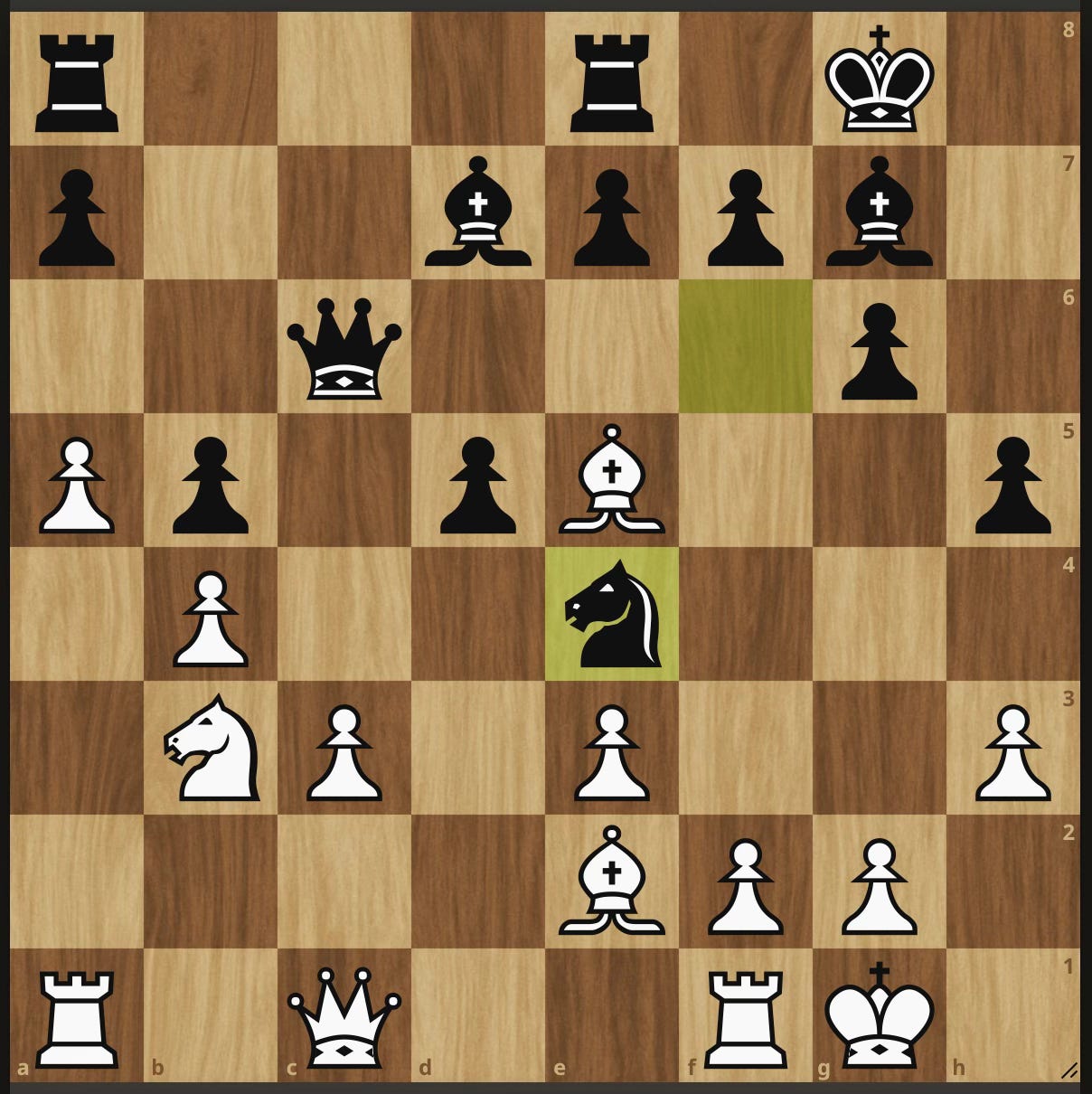
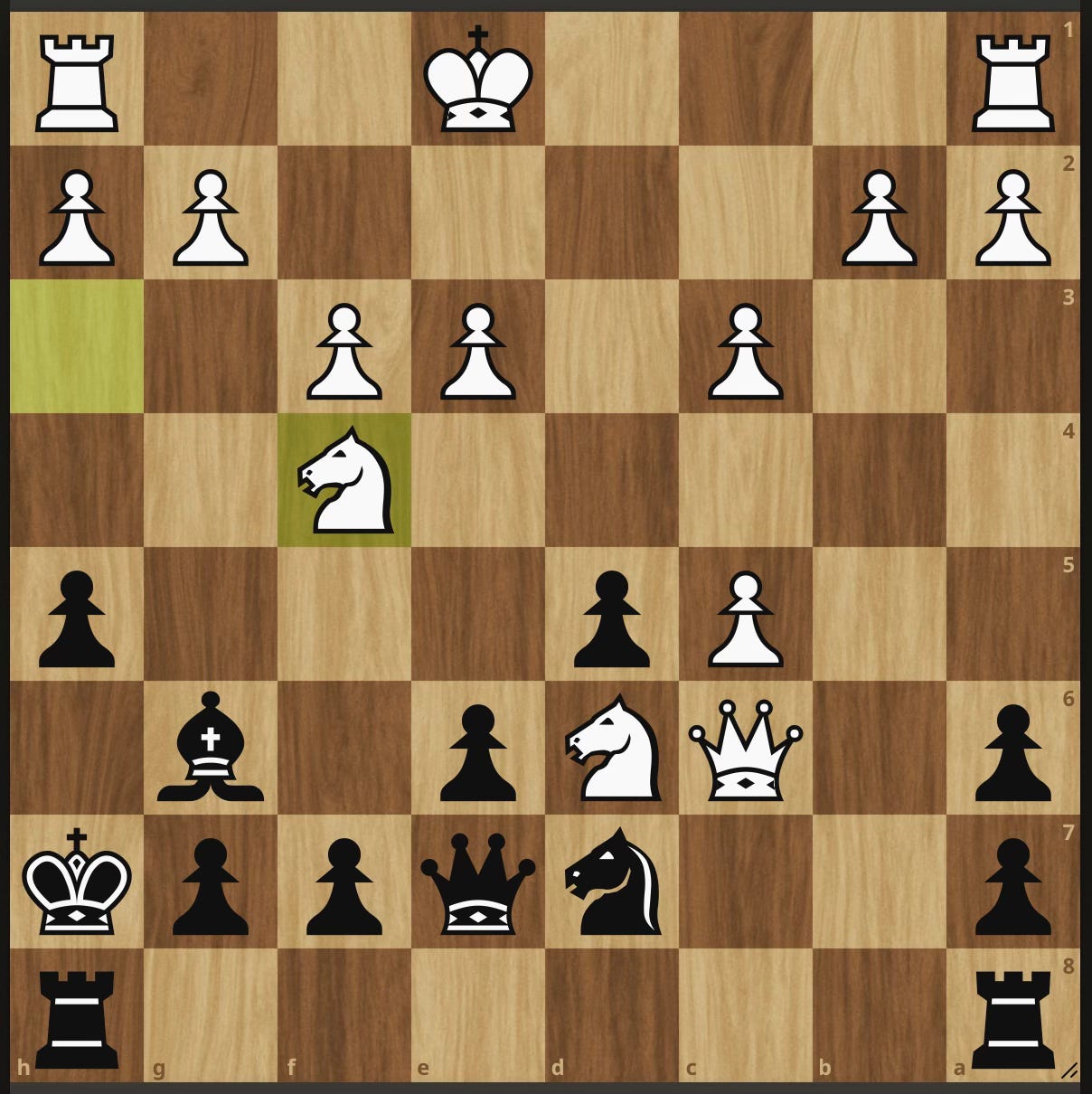
Right here I knew I was going to drop the c3 pawn but then a funny thing happened. I noticed that after 1.Bxg6 Kxg6 2.Nd4 White gets pressure on the Queen, the b5 pawn, and then has a check on e6 if needed. I assumed 2..Qxc3 3.Qxc3 Nxc3 4.Rac1 and I think White is a little better. I tucked that away in my memory banks and then my opponent played 2…Nxc3?
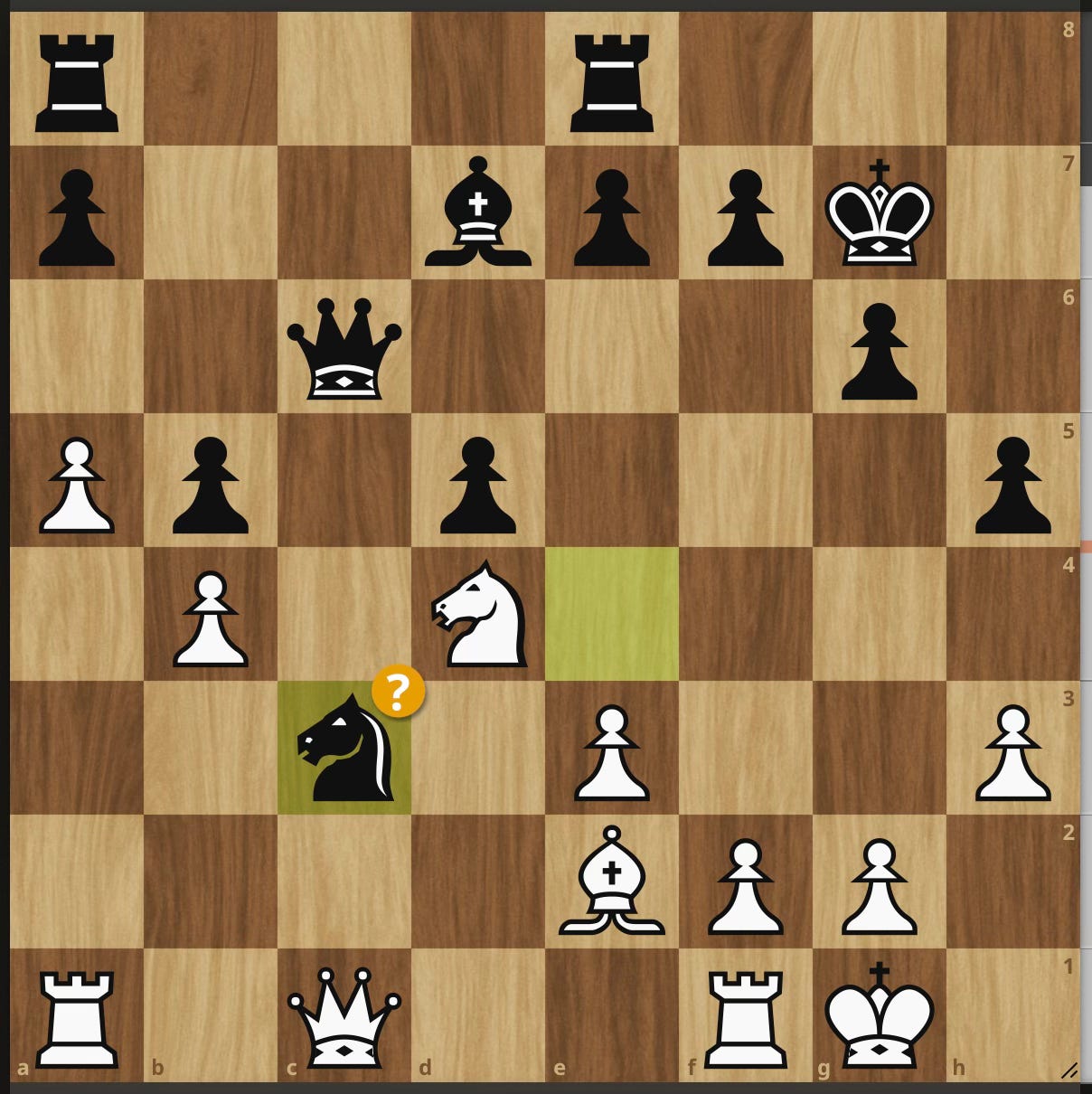
There’s only one winning line here for White and I spent a few minutes making sure it worked. White can easily lose here if not careful. For example Nxc6 loses to Nxe2+. So we played Bxb5 Qxb5!? Qxc3! (critically not Nxb5 Ne2+) which sets up that discovered check I had seen a few moves back. After Qc4?? it’s mate in 2 with Ne6+! Kh6 Qg7# Afterwards I tried to console the kid as that’s a hard move to see when playing defense. 1-0, 2.5/3
USCF 1604
I had to leave and couldn’t play the final round due to family commitment. I had arranged for the bye when I registered so I ended up 3.0/4 for the tournament. This was good enough for a share of first place alongside my first round opponent!
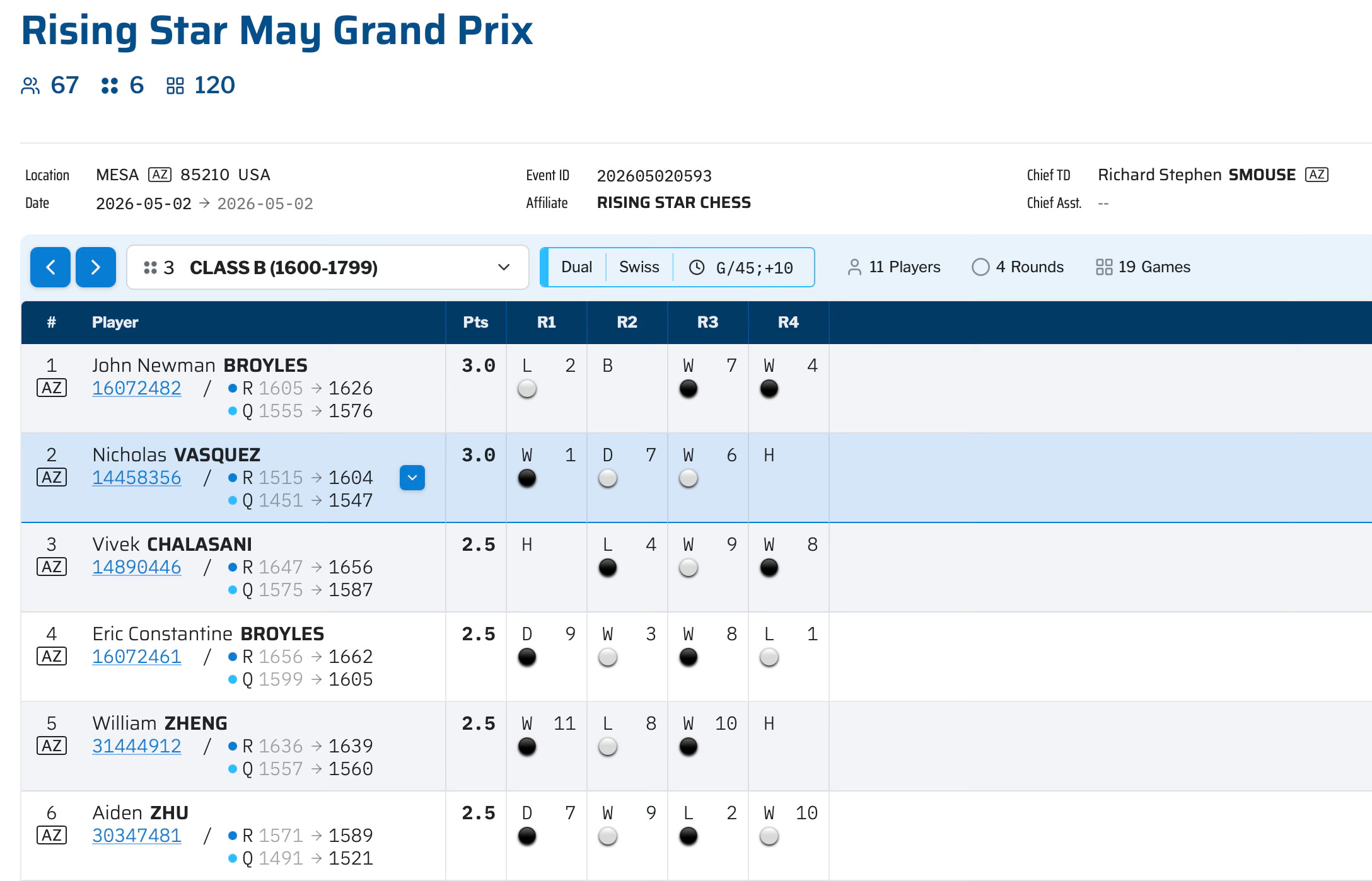
The tournament pushed me back over 1600 with an official USCF rating of 1604. Not a bad result, even if I did get lucky in some of the games. These OTB games are for real, and there’s no take backs. Blunders happen and they count. (God knows they’ve happen to me.) This is the first time I’ve been over 1600 since 2024.
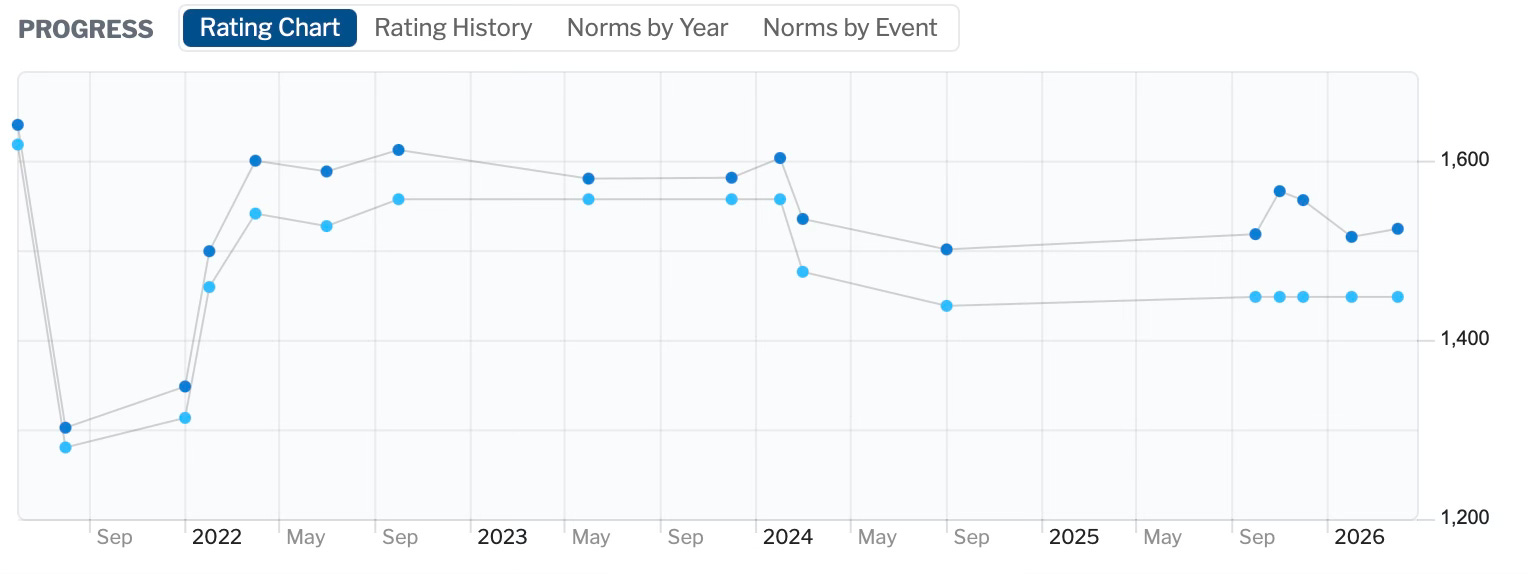
I feel like I’m getting stronger. The combination of tactics and calculation in my training regimen has helped, but I have so far to go still. My experience in these games tells me what I need to work on. I believe that to be basic, simple calculation. Trying to find my way through simple options and lines is hard for amateurs like myself. As I said last time I am a more intuitive player and Aaggaard was right, I struggle with accuracy. Perhaps I am just overthinking my options. Or perhaps I have new things to learn. Whatever it is, I want to be able to choose moves and lines that don’t give my opponents tons of winning options. Also, I want to be able to take advantage of my opportunities when they show up. Against stronger competition I won’t be given as many winning chances. I feel I need to be sharper in non-tactical positions if I am to reach 1700 let alone 1800. At least I have a sense of where the work is. That alone is worth the investment required to play in OTB.
Thanks for reading, this was a fun one for me to write. We all like winning, but I really enjoy the sense of progress even if the rating doesn’t budge. I do feel like I am making progress, which makes this whole process fun. Would love to hear your experiences playing OTB! Until next time!
P.S.
The puzzle I showed you:
It’s White to move and the Black king has put itself on f7 to break the pin on the e pawn. My first instinct was to play Nxe4 but then talked myself out of it over the next 10 minutes and instead played Nd4 Nxd4 cxd Bxd4 Qb3 Kg7. The engine doesn’t mind that line but you need to follow it up with a Rad1 to make it work. However, Nxe4 was absolutely the best move here. Nxe4 dxe Qb3+! and Black is in trouble. Stockfish has it at +3 for White. The critical thing is the King on f7 cannot protect itself easily. Be6 would allow Qxb7+ and Kf6 instead would allow Rxe4 and a mating net is starting to form.
Being amateur I went on to make the wrong choices and those central pawns eventually pushed all the way to promotion. Tough loss.
As you mentioned here, the time and energy needed to play OTB makes the experience dramatically different - you're invested in such a different way than in online chess, and each game requires patience and resilience that can really only be developed by playing a lot OTB. I'm in a similar situation in regards to kids and work, and I convinced my wife to let me play on Tuesday nights in San Francisco. I showed up to the first game last Tuesday, was playing almost 400 points down, blundered a tactic, and had to totally readjust to the situation on the board. You wrote that you got lucky, and you probably did a little, but a lot of luck is just resilience rebranded - if you keep fighting hard and keep your wits about you, good things tend to happen.
I saw Qb3+ but then missed the loose pawn on b7 coming with check. I think I would have played Nxe4 regardless but with a queen trade though. I'd try to assert that three pawns and the weak king would make up for the piece.